TPMS Sensors Explained: What They Do, Why They Matter, and When to Replace Them
This is a subtitle for your new post
TPMS Sensors Explained: What They Do, Why They Matter, and When to Replace Them
If your TPMS light is on, your vehicle is trying to tell you something important. The Tire Pressure Monitoring System (TPMS) is designed to help keep you safe, improve fuel economy, and extend tire life by monitoring tire pressure in real time.
At Woodard’s Smooth Ride, we see TPMS issues every day — from dead sensor batteries to damaged sensors during tire changes. Here’s what every driver should know about TPMS sensors, how they work, and why they matter.
What Is a TPMS Sensor?
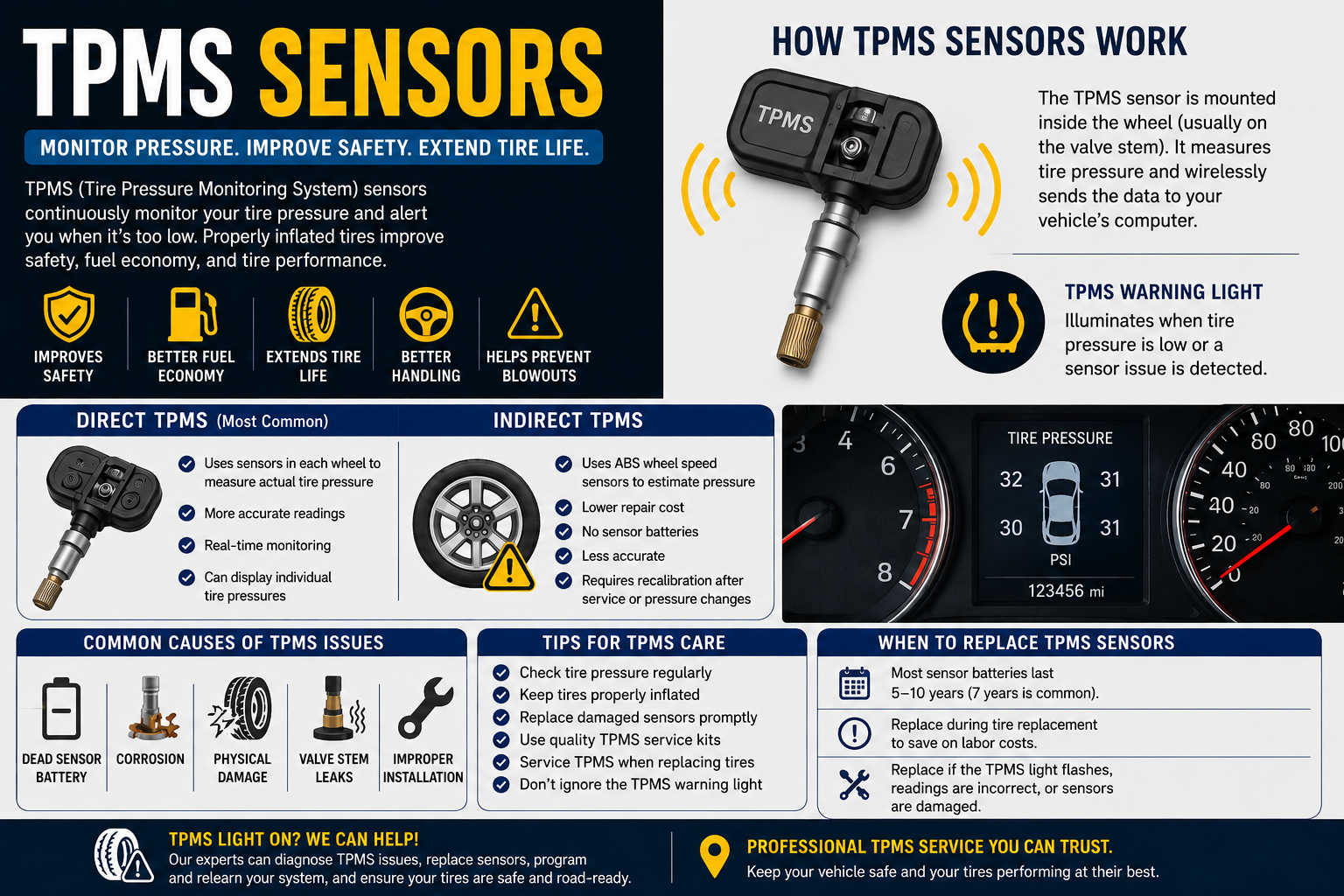
A TPMS sensor is a small electronic device mounted inside your wheel, usually attached to the valve stem. Its job is to monitor the air pressure inside your tire and send that information to your vehicle’s computer.
When tire pressure drops too low, the system turns on the TPMS warning light on your dashboard.
Most modern vehicles are equipped with TPMS systems because properly inflated tires are critical for:
- Safe handling and braking
- Tire life
- Fuel economy
- Even tire wear
- Preventing blowouts
Direct TPMS vs. Indirect TPMS
There are two main types of TPMS systems.
Direct TPMS
Direct TPMS uses physical sensors inside each wheel to measure actual tire pressure.
Benefits of direct TPMS:
- More accurate readings
- Real-time pressure monitoring
- Can often display individual tire pressures
Most newer vehicles use direct TPMS systems.
Indirect TPMS
Indirect TPMS does not use physical pressure sensors. Instead, it uses wheel speed sensors from the ABS system to estimate tire pressure based on tire rotation speed.
Benefits of indirect TPMS:
- Lower repair cost
- No sensor batteries to fail
Drawbacks:
- Less accurate
- Requires recalibration after tire service or pressure adjustments
Many Honda vehicles and some older models use indirect TPMS systems.
How Long Do TPMS Sensors Last?
Most TPMS sensor batteries last between 5–10 years, with 7 years being very common.
The battery is sealed inside the sensor, meaning the entire sensor usually has to be replaced once the battery dies.
Common signs of failing TPMS sensors include:
- TPMS warning light flashing
- Intermittent tire pressure readings
- One tire not displaying pressure
- Repeated TPMS faults
If your vehicle is over 5 years old and needs tires soon, it may make sense to replace the sensors proactively.
What Causes TPMS Sensors to Fail?
Several things can cause TPMS sensor problems:
Dead Internal Battery
The most common issue. TPMS sensor batteries eventually wear out over time.
Corrosion
Moisture, road salt, and age can corrode aluminum valve stems and sensor hardware.
Physical Damage
Sensors can be damaged during tire mounting or dismounting if proper procedures are not followed.
Valve Stem Leaks
Rubber seals and valve cores can wear out and leak air.
Can You Drive With the TPMS Light On?
Technically, yes — but it should never be ignored.
A TPMS light could mean:
- One or more tires are low on air
- A tire has a puncture
- A sensor has failed
- The system needs recalibration
Driving on underinflated tires can lead to:
- Uneven tire wear
- Poor fuel economy
- Reduced handling
- Increased stopping distance
- Tire failure or blowouts
Checking the actual tire pressures is always the first step.
Does TPMS Affect Tire Life?
Absolutely.
Improper tire pressure is one of the biggest causes of premature tire wear.
Underinflated tires can cause:
- Shoulder wear
- Heat buildup
- Reduced fuel economy
- Increased rolling resistance
Overinflated tires can cause:
- Center tread wear
- Harsh ride quality
- Reduced traction
TPMS helps drivers catch pressure issues early before they become expensive tire problems.
Do TPMS Sensors Need Programming?
Sometimes.
Many modern TPMS sensors require:
- Relearn procedures
- Programming
- Sensor registration
Some vehicles automatically relearn sensors after driving, while others require specialized TPMS tools.
At Woodard’s Smooth Ride, we use professional TPMS equipment to properly diagnose, program, and relearn sensors when needed.
Should You Replace TPMS Sensors During Tire Replacement?
In many cases, yes.
If your sensors are older and your tires are already off the wheels, replacing TPMS sensors during tire installation can save labor costs later.
It’s also common to install:
- New TPMS service kits
- Valve cores
- Seals
- Valve stems
This helps prevent future leaks and corrosion issues.
TPMS Warning Light FAQs
Why is my TPMS light flashing?
A flashing TPMS light usually indicates a system fault or failed sensor instead of low tire pressure.
Will colder weather trigger the TPMS light?
Yes. Tire pressure drops approximately 1 PSI for every 10°F decrease in temperature.
Can I replace just one TPMS sensor?
Yes. Sensors can usually be replaced individually unless multiple sensors are failing due to age.
Does tire rotation affect TPMS?
Sometimes. Certain vehicles may require a relearn procedure after rotation.
TPMS Service in Portland, TN
If your TPMS light is on, don’t ignore it. At Woodard’s Smooth Ride, we can diagnose TPMS problems, replace failed sensors, perform relearns, and make sure your tires are properly inflated for safe driving.
Whether you need one sensor replaced or a complete TPMS service during new tire installation, we’ve got you covered.
Stop by Woodard's Smooth Ride for professional tire and TPMS service you can trust.