Why Tire Rotations Matter (And How They Save You Money)

Andrew Whited • March 18, 2026

Why Tire Rotations Matter (And How They Save You Money)

# Why Tire Rotations Matter (And How They Save You Money)

When it comes to getting the most out of your tires, **regular tire rotations are one of the simplest—and most overlooked—maintenance services**.


Most drivers don’t think about rotations until there’s a problem. By then, uneven wear has already shortened the life of the tires.


Let’s break down what a tire rotation actually does—and why it matters.


What Is a Tire Rotation?


A tire rotation is the process of moving each tire to a different position on the vehicle.


This is done to:


  • Promote even tread wear
  • Extend tire life
  • Maintain proper handling and traction


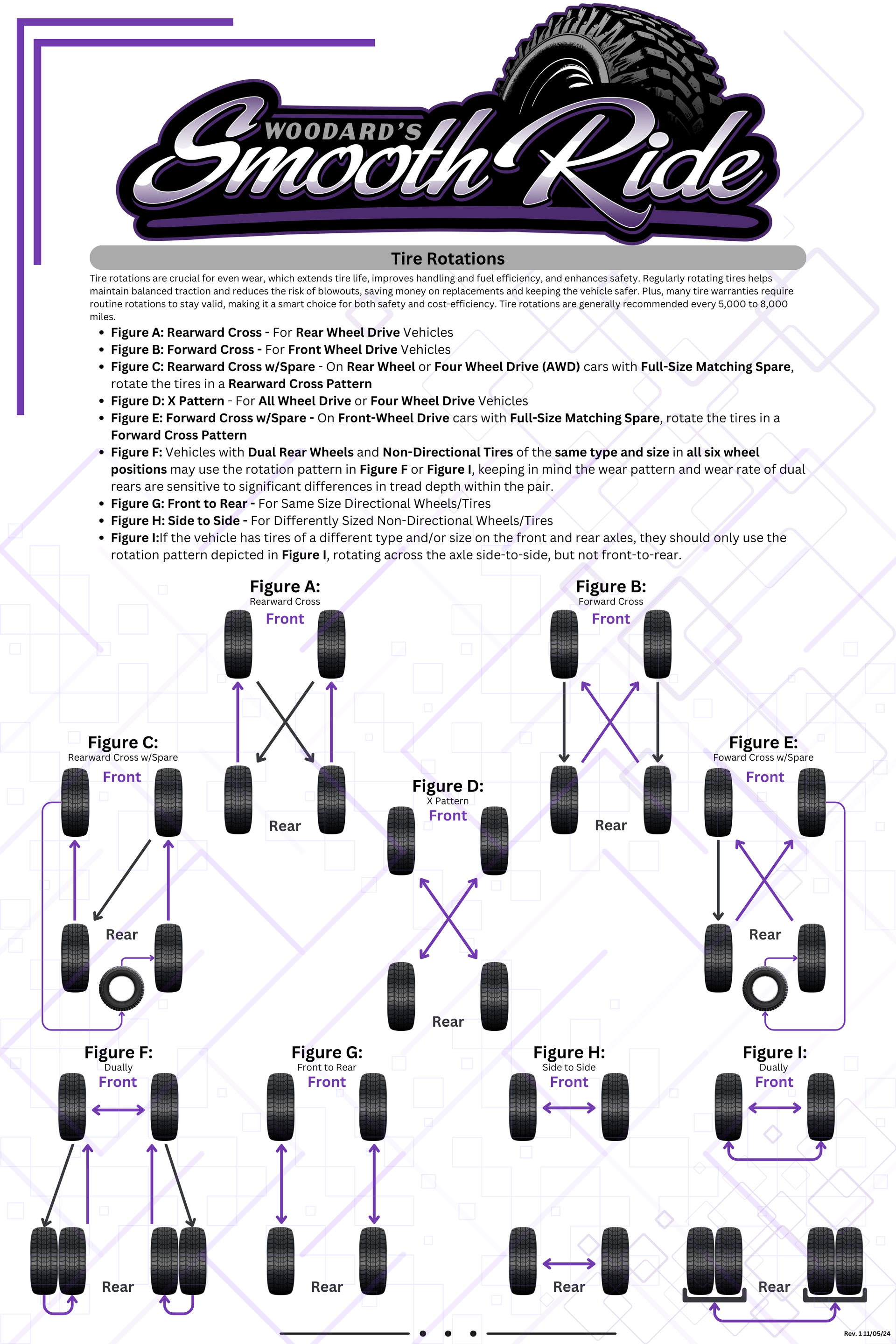
Different vehicles use different rotation patterns depending on:


  • Front-wheel drive
  • Rear-wheel drive
  • All-wheel drive
  • Tire type (directional vs non-directional)


Why Tire Rotations Are So Important


1. Prevent Uneven Wear


Your front tires do most of the work—steering, braking, and carrying engine weight. Because of that, they wear faster than the rear tires.


Without rotation:


  • Front tires wear out early
  • Rear tires still have usable tread
  • You end up replacing tires sooner than necessary


2. Extend Tire Life


Routine rotations can add thousands of miles to your tires.


That means:


  • Fewer tire purchases
  • Better return on your investment
  • More consistent performance over time


3. Improve Safety


Uneven tread = reduced traction.


That can lead to:


  • Poor braking performance
  • Reduced wet-road grip
  • Increased risk of hydroplaning


Even wear keeps your vehicle stable and predictable.


4. Protect Your Suspension & Alignment


Irregular wear patterns can indicate:


  • Alignment issues
  • Worn suspension components


Regular rotations help catch these problems early—before they turn into expensive repairs.


How Often Should You Rotate Your Tires?


A good rule of thumb:


👉 Every 5,000–6,000 miles

👉 Or every oil change


However, this can vary depending on:


  • Driving habits
  • Vehicle type
  • Tire type


If you’re unsure, your shop should track and recommend intervals for you.


Signs You’re Overdue for a Rotation


Watch for these indicators:


  • Uneven tread wear (inside or outside edges)
  • Vibration while driving
  • Road noise increasing
  • Vehicle pulling slightly to one side


If you notice any of these, it’s time to get your tires checked.


What Happens If You Skip Rotations?


Skipping rotations can cost you—literally.


You may experience:


  • Premature tire replacement
  • Reduced fuel efficiency
  • Poor ride quality
  • Voided tire warranties (many require documented rotations)


Why Choose a Professional Rotation?


At a professional shop, a tire rotation isn’t just moving tires around.


It typically includes:


  • Tire condition inspection
  • Air pressure adjustment
  • Tread depth measurement
  • Visual check of suspension and steering components


That extra layer of inspection is what helps prevent bigger issues down the road.


Final Thoughts


Tire rotations are one of the highest ROI services in vehicle maintenance.


They’re quick, affordable, and can significantly extend the life of your tires—while keeping you safer on the road.


Need a Tire Rotation?


If you’re in the Portland, TN area, stop by Woodard’s Smooth Ride. We’ll make sure your tires wear evenly, ride smooth, and last as long as they should.


By Woodard's Smooth Ride February 23, 2026
Discover top brake repair and maintenance services at Woodard's Smooth Ride in Portland, TN. Drive safely with our expert team. Visit us today!
By Woodard's Smooth Ride January 30, 2026
Discover top-notch suspension services at Woodard's Smooth Ride in Portland, TN. Optimize your vehicle's performance today. Schedule an online appointment now!
By Andrew Whited October 24, 2025
When you buy new tires or start noticing a vibration in your steering wheel, your first thought might be to get a balance. But not all balancing is created equal. At Woodard’s Smooth Ride , we use Road Force Balancing — the gold standard for pinpointing and correcting ride issues that traditional balancers simply can’t detect. What Is Road Force Balancing? Road Force Balancing goes beyond standard spin balancing. Instead of just measuring weight distribution, it simulates how your tire behaves under real-world road conditions. A Road Force Balancer , like the Hunter Road Force Elite , uses a roller to apply pressure to the tire—mimicking the forces your wheel experiences when it’s actually on the road. This process identifies issues like: Tire stiffness or “radial force variation” Bent wheels or imperfections in the rim Tire mounting errors or mismatched high and low spots Internal tire inconsistencies that cause vibration even when the wheel is “balanced” Why Regular Balancing Isn’t Always Enough Traditional balancers only address static and dynamic imbalance , meaning they correct uneven weight around the wheel. That’s great for basic vibration fixes—but it can’t detect tire uniformity problems or radial runout . If you’ve ever had your tires balanced multiple times and the vibration still won’t go away, chances are you need a Road Force Balance . How It Works Measurement – The balancer applies 700+ pounds of pressure to each tire, replicating driving conditions. Diagnosis – The machine reads variations in stiffness and runout, showing where the problem lies. Correction – Our technicians reposition the tire on the wheel, adding weights only if needed, to achieve the smoothest possible ride. Verification – The system confirms everything is within spec before you hit the road. Benefits of Road Force Balancing ✅ Eliminates vibrations and steering shake ✅ Improves tire life and tread wear ✅ Enhances ride comfort and handling ✅ Prevents unnecessary suspension wear ✅ Ideal for high-performance, off-road, and oversized tires Whether you drive a lifted truck, a luxury SUV, or a daily commuter, Road Force Balancing ensures every wheel is performing perfectly. When Should You Get a Road Force Balance? After installing new tires or wheels When experiencing vibration at highway speeds If your steering wheel shakes or the ride feels rough When tires show uneven wear despite being “balanced” Anytime a standard balance doesn’t solve the problem Experience the Difference at Woodard’s Smooth Ride At Woodard’s Smooth Ride , we invest in precision equipment and expert technicians because we believe every customer deserves a truly smooth ride. Our Road Force Balancing service helps us diagnose and fix what others miss — saving you time, money, and frustration. Schedule your Road Force Balance today and feel the difference the moment you drive away. 📍 Visit us at Woodard’s Smooth Ride — where precision meets comfort. 
By Woodard's Smooth Ride October 16, 2025
Discover expert auto maintenance tips from Woodard's Smooth Ride in Portland, TN. Keep your car running smoothly with our guidance. Visit us today!
By Woodard's Smooth Ride September 18, 2025
Optimize your vehicle performance with expert alignments at Woodard's Smooth Ride in Portland, TN. Ensure a smoother ride today!
By Andrew Whited September 8, 2025
Learn why buying new tires is safer, smarter, and more cost-effective than used tires. Woodard’s Smooth Ride in Portland, TN has you covered.
By Woodard's Smooth Ride August 21, 2025
Discover brake maintenance tips from Woodard's Smooth Ride in Portland. Ensure your safety with expert care. Schedule an online appointment now!
By Woodard's Smooth Ride July 24, 2025
Discover expert suspension maintenance tips at Woodard's Smooth Ride in Portland, TN. Enhance vehicle safety and comfort. Visit us today!
By Andrew Whited July 21, 2025
If your vehicle has a few years on it, you've no doubt had your tires rotated a few times. That means, of course, that a technician has loosened the lug nuts (which hold the wheels on) to remove the wheels and then put them back on. Many vehicles have lug bolts that go through the wheel into the wheel hub rather than bolts that are attached to the hub and poke out through the wheel. For our purposes, we’ll simply refer to both styles as “lug nuts”. Don't be surprised if your Service Advisor tells you it's time for several of those lug nuts to be replaced. Here's why. There are different styles of lug nuts. Many of them are constructed from two separate pieces. One is the main part that is steel, and the other is a chrome, aluminum, or stainless steel cap that fits on top and makes it look pretty. Time takes its toll on your lug nuts because they're exposed to the elements (salt, water, grime). The steel part oxidizes (otherwise known as "rusts"). That makes the steel expand, distorting the shape of the cosmetic cap, so it's no longer the right fit with your lug nut wrench. Corroded wheel nuts will also not torque correctly which can cause a wheel to come loose or even come off the vehicle. After a while, those lug nuts lose their edges and can no longer be tightened or loosened properly. In some cases, it's impossible to budge them at all. Now, that's something no one wants. If you have a flat tire and your vehicle is at the side of the road, you may not be able to get the wheel off to put on the spare. The last resort may be towing the vehicle. Each time a technician takes your wheels off, they will see what kind of shape the lug nuts are in and may recommend replacement before you get yourself into a predicament. Your NAPA AutoCare Center Service Advisor may suggest using a one-piece lug nut that is far less likely to develop this type of problem in the future. You know the old saying: an ounce of prevention is worth a pound of cure. And in this case, replacing lug nuts before they become a problem can save you a lot of aggravation, time and money down the road. Woodard's Smooth Ride 300 North Broadway PORTLAND, TN 37148 6155880069
By Andrew Whited July 14, 2025
The Importance of Proper Tire Inflation: What Every Driver Should Know When was the last time you checked your tire pressure? If you’re like most drivers, it’s probably been a while. But here’s the truth: proper tire inflation is one of the simplest — and most important — things you can do to protect your tires, your vehicle, and your wallet. Why Tire Pressure Matters Tires are designed to operate at a specific pressure — usually between 30 and 35 PSI (pounds per square inch) for most passenger vehicles. When tires are underinflated or overinflated, it affects everything from how your car handles to how much gas you burn. Underinflated Tires: Cause uneven tread wear (especially on the edges) Reduce fuel economy Create more heat, increasing the risk of a blowout Reduce steering and braking performance Overinflated Tires: Wear out the center tread more quickly Provide a rougher, noisier ride Decrease traction, especially in wet or slippery conditions How to Check Tire Pressure Checking your tire pressure only takes a few minutes. Here’s how: Find the recommended pressure — Look for the sticker inside your driver’s door or in your owner’s manual. Use a tire pressure gauge — Digital, dial, or stick gauges all work fine. Check tires when cold — Tire pressure rises as you drive, so check them before the car has been on the road. Add or release air as needed — Most gas stations have air pumps. Many tire shops (including ours) are happy to top them off for free. When to Check Tire Pressure Once a month — Air naturally escapes over time, even without a leak. Before long road trips When seasons change — Cold air contracts, so you’ll lose pressure as temperatures drop. TPMS Warning Light ≠ Maintenance-Free Many newer vehicles have a Tire Pressure Monitoring System (TPMS), but don’t rely on it completely. TPMS usually only triggers when pressure is dangerously low — not when it’s a few PSI under. That’s why it’s still important to check manually. What We Do at the Shop At Woodard's Smooth Ride, we check tire pressures during every visit — whether you're in for a rotation, an oil change, or just a pit stop. We’ll make sure your tires are inflated properly and inspect them for any signs of damage, leaks, or uneven wear.
More Posts